Author
support@jpgdesigns.com
Share
Understanding Eyelid Bags and Post-Surgery Hollowing
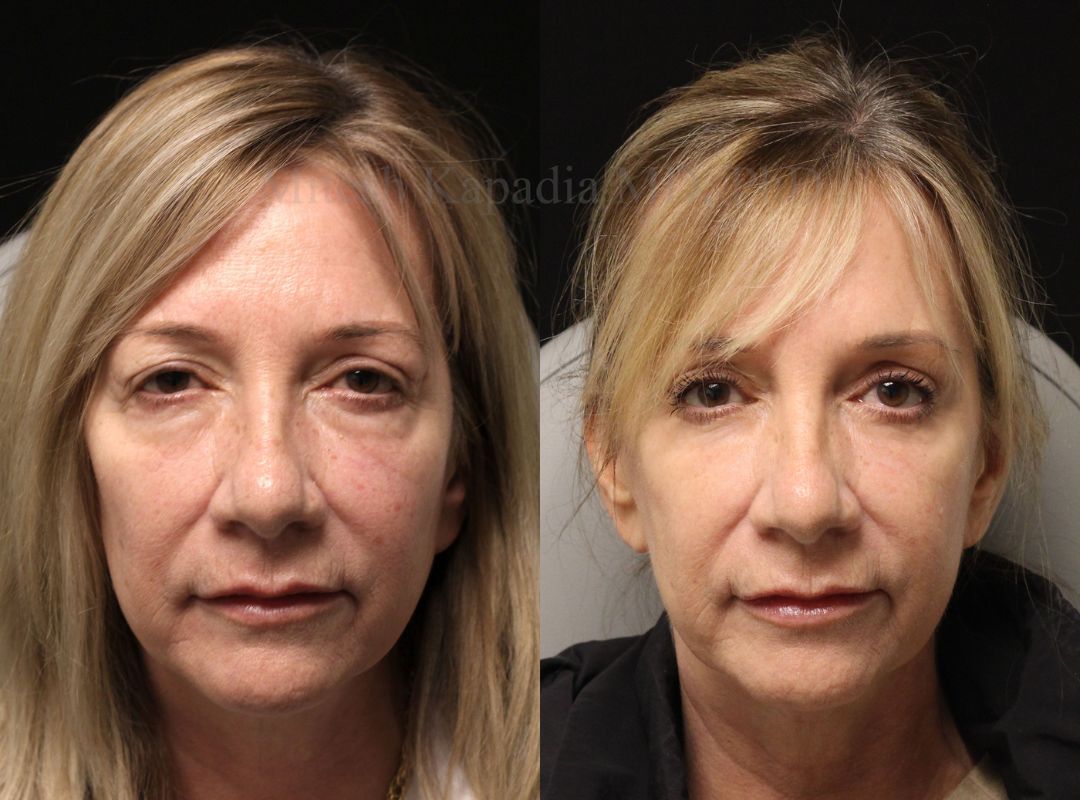
Puffiness under the eyes, also known as eye bags, can give patients a tired look even when they are well rested. Almost all patients with under-eye bags look much better when excess fat is removed under the eyes, but the lower eyelids can sometimes have a hollow appearance after surgery, also known as a tear trough deformity. This problem can be present in some very young patients even without surgery. I hate the term tear trough deformity since there is no real “deformity” and I will just refer to this problem as lower eyelid hollowing in the rest of this article.
This article goes through different methods for optimizing the results of lower blepharoplasty surgery by minimizing lower eyelid hollowing after surgery. Different eyelid surgeons will have different opinions on what they think works best. My goal is not to disparage anyone else’s technique or opinion – I’m just presenting my point of view, which other surgeons I hold in high regard will completely disagree with. There are a lot of surgeons who do things differently and have great results.
The goal of lower blepharoplasty surgery is to improve the appearance of the lower eyelids by treating the skin and underlying fat. The goal is a smoother contour from the eyelid to the cheek creating a younger, less tired appearance.
The Modern Approach to Lower Blepharoplasty
Traditionally, lower eyelid surgery involved the removal of excess fat under the eyes through an incision on the outside of the eyelid, under the eyelash line. A more modern approach to this surgery involves an incision on the inside of the eyelid so there is no visible scar. This can be done in conjunction with CO2 laser resurfacing of the lower eyelid skin to improve skin texture without a visible incision. In my experience, this is the best approach for the vast majority of patients in their 20s-60s. Older patients may sometimes require skin removal and eyelid tightening.
In some patients, removing the excess fat under the eyes can create a hollow appearance. In most cases, this is because the bone under the eyes (inferior orbital rim), which was previously covered with fat, becomes more visible.
A variety of different techniques have been developed to treat this issue. Patients often ask why you can’t just remove less fat, which sounds great in theory but doesn’t work in actual practice. The problem is that any excess fat will sit on top of the bone and still cause an under eye bag. There is too much volume above the bone and not enough volume along and below the bone. Also, if a patient is still a little puffy right after surgery, this problem is likely to get a lot worse over the next few years leading to poor longer term results.
Hollowing after lower blepharoplasty surgery can be prevented or treated using different methods. All of them have advantages and disadvantages and none are perfect. I’ll explain the pluses and minuses of each of these techniques and why I do what I do. Currently, the most technique used by the most eyelid surgery specialists is fat repositioning. While I do think this is a good technique in some patients, my preferred technique is to remove the fat and add postoperative fillers when needed. Let me explain why.
Lower Blepharoplasty with Fat Repositioning
In lower eyelid surgery with fat repositioning, the excess fat in the lower eyelids is moved (repositioned) instead of removed. After the fat pads are exposed, additional dissection is performed across and below the bone and the excess fat from the lower eyelid is pulled down into this cavity.
The Drawbacks of Fat Repositioning
Theoretically, this approach makes the most sense. In my personal experience, it doesn’t work as well in practice. What are the main issues with fat repositioning?
- There is sometimes a limited amount of fat to reposition. If there is not enough fat to efface the contour of the bone completely, then there is still residual hollowing after surgery.
- Fat repositioning works better on the inner 1/3 of the eyelid than the outer 2/3. The lateral fat pad can sometimes be repositioned but is too friable in many patients and falls apart before it can provide enough integrity to efface the bone.
- The fat that’s pulled down over the bone can sometimes pull back and lead to recurrent under eye bags.
- If the fat really survives in its new position, what will this look like 20-30 years from now? I treat a lot of really young patients and worry about this issue a lot. I don’t want to do anything now that will cause a problem later. No surgery lasts forever – when I remove fat and it comes back 10-20 years later I know I can easily go back and remove some more. When it’s in a different spot it’s harder to get to if it looks too puffy.
- There is more dissection and manipulation of the tissue leading to more swelling and a longer recovery time.
- The surgery takes longer so I have to charge considerably more for the extra time.
- I am a perfectionist. Even when I reposition fat there is often some hollowing that I want to treat with fillers and I ask myself why I did all this extra work (with additional cost to the patient) when I still want to add fillers later.
Lower Blepharoplasty with Fat Transfer
In lower blepharoplasty with fat transfer, the excess fat in the lower eyelids is either removed or repositioned and liposuction from the belly or thighs is used to harvest fat that is used as a natural filler to treat hollowing.
I love the idea of this. In theory, it sounds so much better to use a natural substance like your own fat instead of an artificially manufactured filler and I get that point. I try to eat healthy foods and avoid processed products too, but here are the issues with fat transfer.
Challenges and Risks of Fat Transfer
- Survival of Fat Cells: Fat is not an inert substance and needs nutrients from blood to survive. When you inject fat into an area it needs to “take”. This means it needs to develop a blood supply so that the injected cells receive enough nutrition to survive.
- Variable Results: How much of the injected fat will take? There is no way to know for sure before surgery. Most surgeons realize that 40-60% of the injected volume will persist so injecting fat requires a lot of purposeful overcorrection. Most surgeons inject fat assuming 60% will take so most patients will be undercorrected if they reach the average of 50%. That’s not the main issue – what about if 70% takes and your whole face looks really puffy? I don’t like things I can’t control, and I can’t control how much injected fat will take.
- Difficult to Remove: Injected fat is extremely difficult to remove. When too much fat is injected or too much takes, it’s very difficult to remove it. There are tiny globules of fat all over the place which are almost impossible to find if you go in surgically to try to remove them. Large lumps that you can feel can usually be removed with additional surgery but this can leave dents. The tiny globules are almost impossible to remove.
- Weight Sensitivity: The injected fat can be very weight sensitive. If you ever gain or lose weight that fat can grow and shrink a lot more than your normal facial fat, especially eyelid fat. Remember that this fat was taken from your belly or your thighs. This fat is much more weight sensitive than the fat in your face. When I gain five pounds I see it in my belly before anywhere else and notice that my pants and belt are tighter than usual. Body fat tends to be a lot more weight sensitive than face fat. With fat transfer you are taking belly fat and putting it into your face. What will your face look like if you gain 20 pounds later in life? If you have fat transfer it’s really important that you maintain your weight for the rest of your life. Unfortunately, many women find that they gain weight during pregnancies or menopause that’s really hard to lose. When patients gain weight after fat transfer they look really puffy and there is not much that can be done. Their initial surgeon has often retired or moved to another state and I don’t have much to offer them to help besides telling them to lose the weight. It’s not a good situation. As I explained above, it’s really hard to remove injected fat.
Adding Under Eye Fillers
Why would you want to inject an artificially manufactured substance instead of using your own fat? The reason is that in practice (at least in my hands) it works a lot better and more predictably than the other options.
I’m the last person to tell you that my way of doing things is perfect. I am a perfectionist and this technique is not perfect – I definitely wish it was. I’ll tell you about not only the pluses of doing things my way, but the negatives as well. As I already mentioned, it’s not perfect.
The Advantages of Hyaluronic Acid (HA) Fillers
Hylaluronic acid (HA) based fillers have been around in the United States since the early 2000s and were used in Europe for years prior to US approval by the FDA. Hyaluronic acid is a natural substance in your body and skin. The problem is that when you inject straight hyaluronic acid it looks great but gets degraded within a few days. Your body has enzymes which break down hyaluronic acid and build it back up constantly. Hyaluronic acid fillers use a process called cross-linking to make them last longer. Are they completely natural – definitely not. Are they close to what’s naturally in your body? Definitely.
When adding volume using HA fillers you can use as much or little as you want. After the initial swelling subsides, the filler tends to hold 80-90% of its initial volume so the final result looks a lot closer to what it looks like as you put it in compared to injected fat. The final outcome is more predictable.
The single biggest advantage to using HA fillers is that they are reversible. There is an enzyme called hyaluronidase which dissolves HA based fillers. The dissolving can be done at any time, including many years later.
Why Under Eye Fillers Sometimes Get a Bad Reputation
Fillers have gotten a bad reputation because they have been overused and used incorrectly. Injectors have been putting way too much filler in people and using it in the wrong ways. There are very good injectors with lots of experience out there, but they are in the minority. A lot of injectors go to a weekend course and claim they are “certified” to do injections. That just means the injector was certified by the people who run the course. The courses are almost always given on a for profit basis, so basically everyone who takes the course is certified. There is no way to learn how to inject fillers well in a few hours. It takes years of training and experience to be good at injecting fillers and there is always more to learn.
Under eye fillers have specifically gotten a bad rep, but this is mainly because of patient selection. Under eye fillers are a great tool in the right situation, but the vast majority of patients who are seeking this treatment are not a candidate based on their anatomy. You know the saying that “when you have a hammer everything looks like a nail”? For many people who make their living injecting fillers, they push fillers as a solution to every problem on the face, and this is where poor results come from.
The most common scenario I see is that a patient has real under eye bags, which an injector tried to camouflage with fillers. In my experience, this rarely works for the long-term. It may look good for a few weeks or a few months, but the amount of filler needed to camouflage an under eye bag almost never looks natural as it settles out.
What Are Fillers Actually Good For?
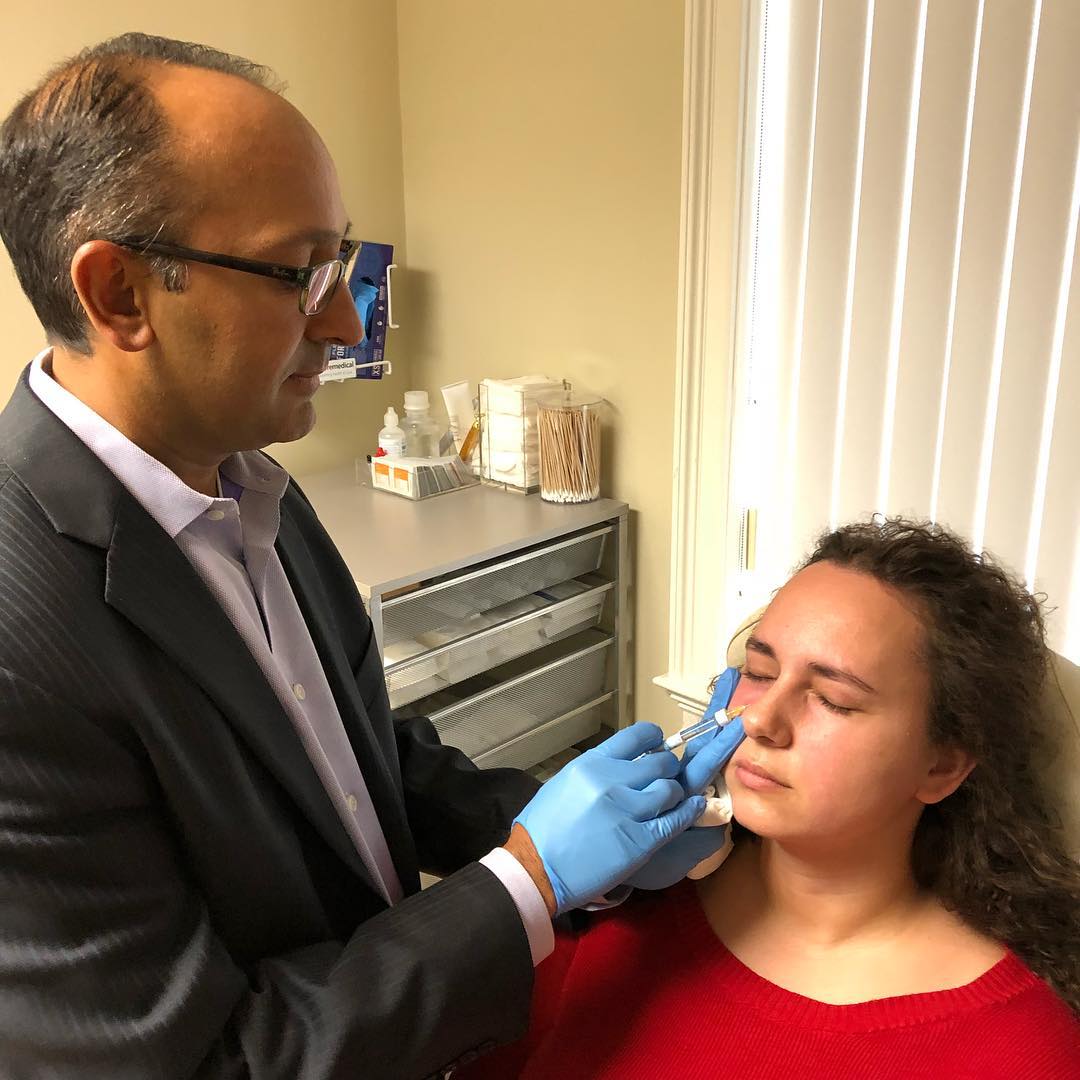
Fillers are great at treating hollowing. If patients look a little hollow after lower blepharoplasty surgery, under eye fillers are a great way to treat this problem.
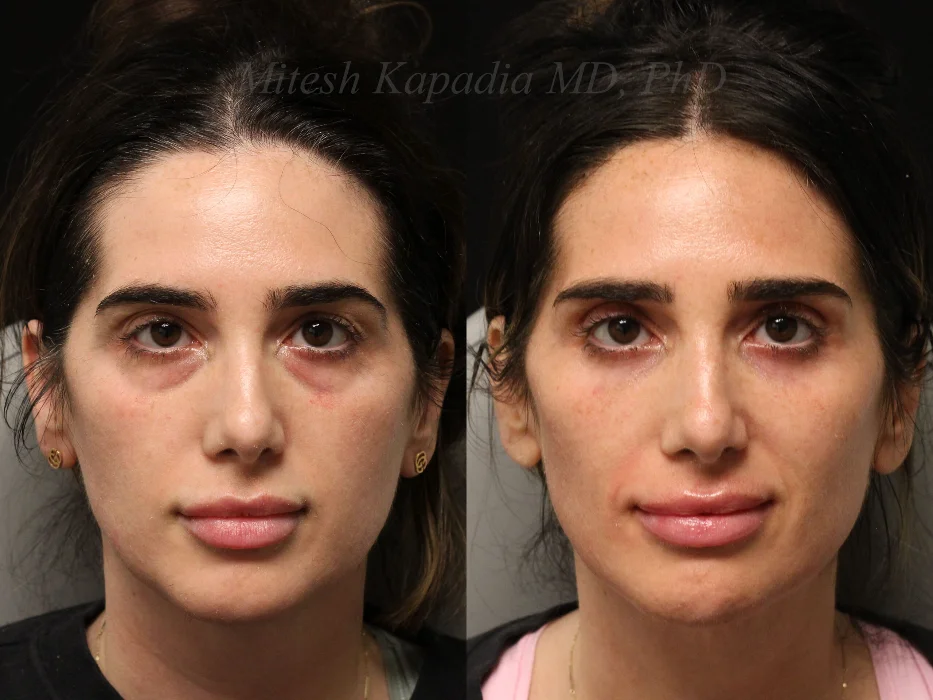
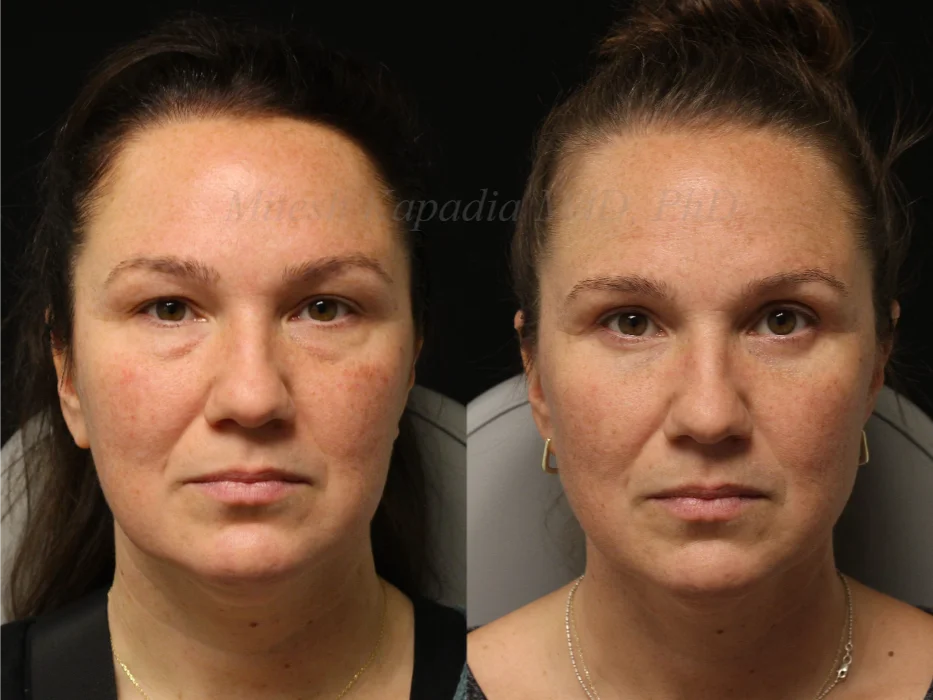
In lower blepharoplasty surgery, excess fat under the eyes is removed, but this sometimes makes the underlying bone more prominent, leading to a slightly hollow appearance. Adding a small amount of filler along the bone helps smooth out the eyelid-cheek junction and optimize surgical results.
Can’t you just remove less fat to reduce hollowing? In practice, this doesn’t really work. The main issue is that the excess fat is above the bone so leaving some excess fat in place just looks like the surgery was done half way and patients still have under eye bags.
Why I Prefer Fillers After Under Eye Surgery
Why do I prefer using fillers in lower eyelid surgery patients instead of fat repositioning or fat transfer?
- Fillers are reversible: There is an enzyme called hyaluronidase which dissolves fillers. If we ever don’t like the way fillers look we can always remove them with a few simple injections in the office.
- Fillers are done after we see the surgical results: During surgery, I remove excess fat and we let it heal. If it looks a little hollow later, we add back filler at the 3-4 month mark once most of the swelling is gone. Even though I have been doing this for 20 years, I can’t always predict who will need fillers after surgery. Some people who I think will need fillers look great with fat removal alone and we don’t need fillers. Other times, I look at a patient and don’t think they will need fillers but 3-4 months after surgery I decide a little filler would help. If I had to make the decision whether or not to inject fat (which is usually done at the same time as surgery) I’m not sure I would always make the right decision.
- Volume predictability: When I am injecting under eye filler, it’s an artistic process and I can visualize how the filler is working while I am injecting. In my experience, the final result is almost always about 90% of the volume I see while injecting. This is a lot more predictable than injecting fat, which can vary from about 40-60% take.
- Shorter surgery time and quicker healing: Fat removal takes less time than fat repositioning or injection. Less time means less anesthesia and usually less cost to the patient. Fat removal also causes a lot less swelling and, in my experience, patients are back to work more quickly.
What Are the Disadvantages to Using Post-Surgery Fillers?
As I’ve mentioned before, there is no perfect solution to volume issues after surgery. Fillers have their downsides as well, but in my experience are still the best option for most patients. I offer post-surgery filler injections to about 25-30% of lower blepharoplasty patients. Many of these patients are so happy with the results they don’t feel the need to have filler placed and we don’t bother.
The main downside to using fillers is chronic swelling. Fillers are made from a material that’s very similar to what’s naturally in your body, but a small subset of patients’ bodies don’t tolerate under eye fillers. When used after lower eyelid surgery, this type of chronic swelling is really uncommon, probably somewhere around 2-3% of patients where I inject fillers after surgery. Since less than 30% of patients even need fillers, this issue only arises in about 1 in 100 patients having lower blepharoplasty surgery. The good thing is that we can always dissolve the filler and the swelling goes away.
What happens if you end up in this 1% of patients? Almost everyone still looks much better than before surgery and doesn’t want to do anything else after we dissolve the filler. Hollowing after surgery is usually mild and still looks a lot better than puffiness for almost everyone. If someone doesn’t tolerate fillers and feels they really want the extra volume, they can always have fat injections but these aren’t perfect either as I’ve explained above.
Summary
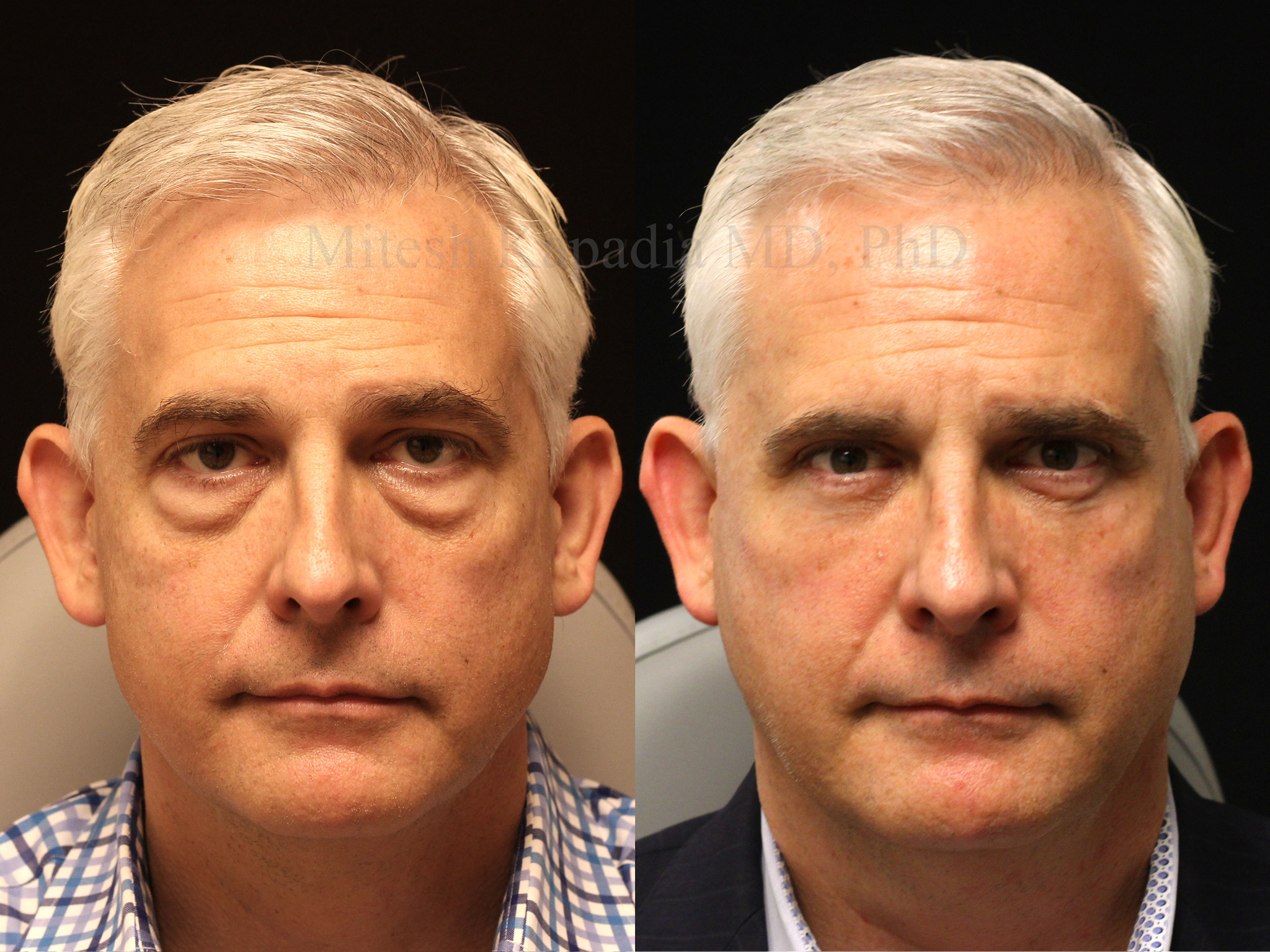
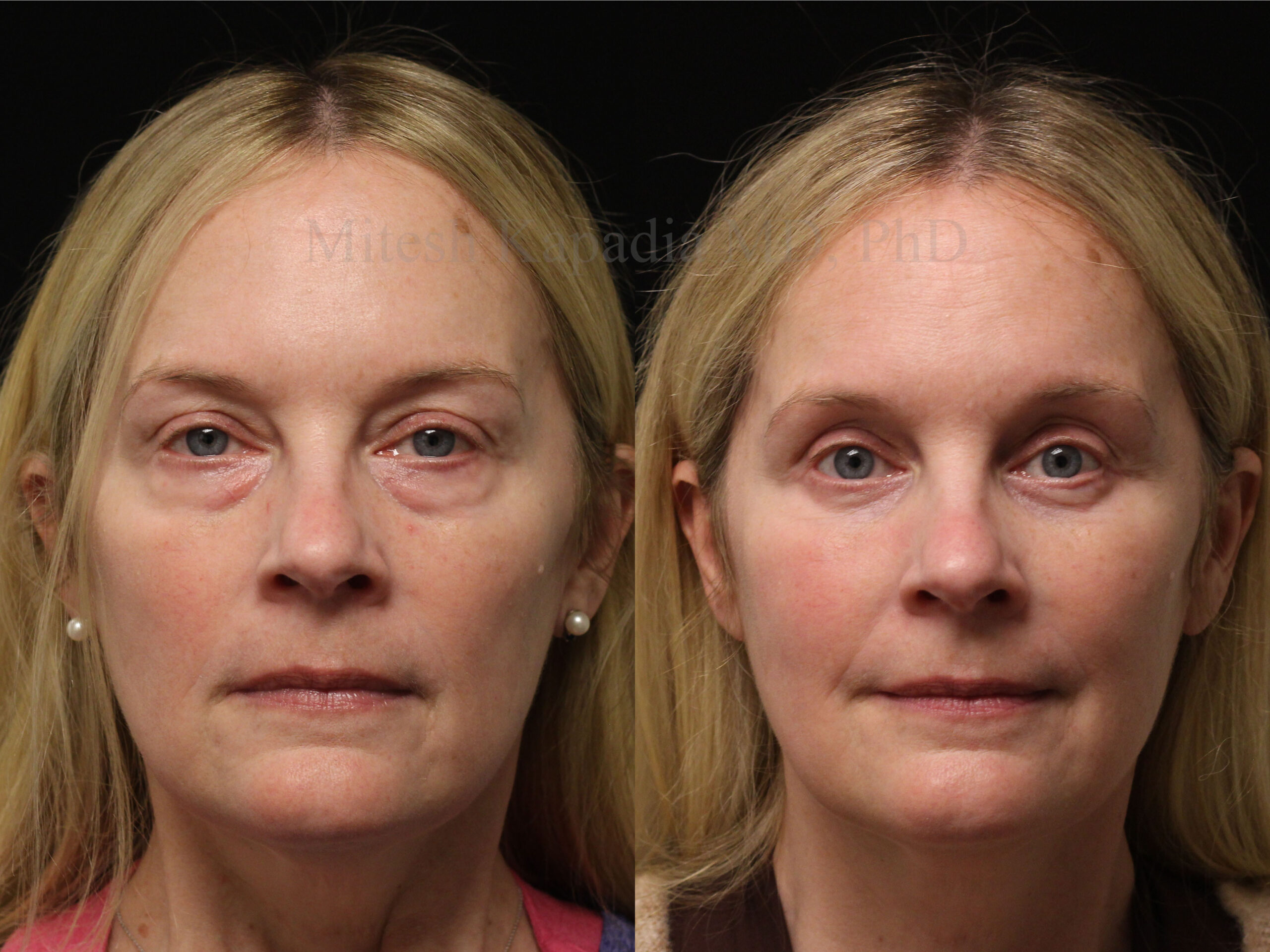
Lower eyelid hollowing can sometimes be an issue post lower blepharoplasty surgery. It’s important to discuss lower eyelid hollowing with your surgeon as well as what he/she does to minimize this issue. The main ways to treat lower eyelid hollowing are fat transposition, fat transfer and filler injections. None of these techniques are perfect, but for the reasons outlined above, injecting fillers when needed after surgery is my preferred technique. I have lots of happy patients who have allowed me to show their photos in my photos gallery – feel free to look through these photos as a guide for what types of results can be accomplished with this technique.