Author
Boston Eyelid Surgery
Share
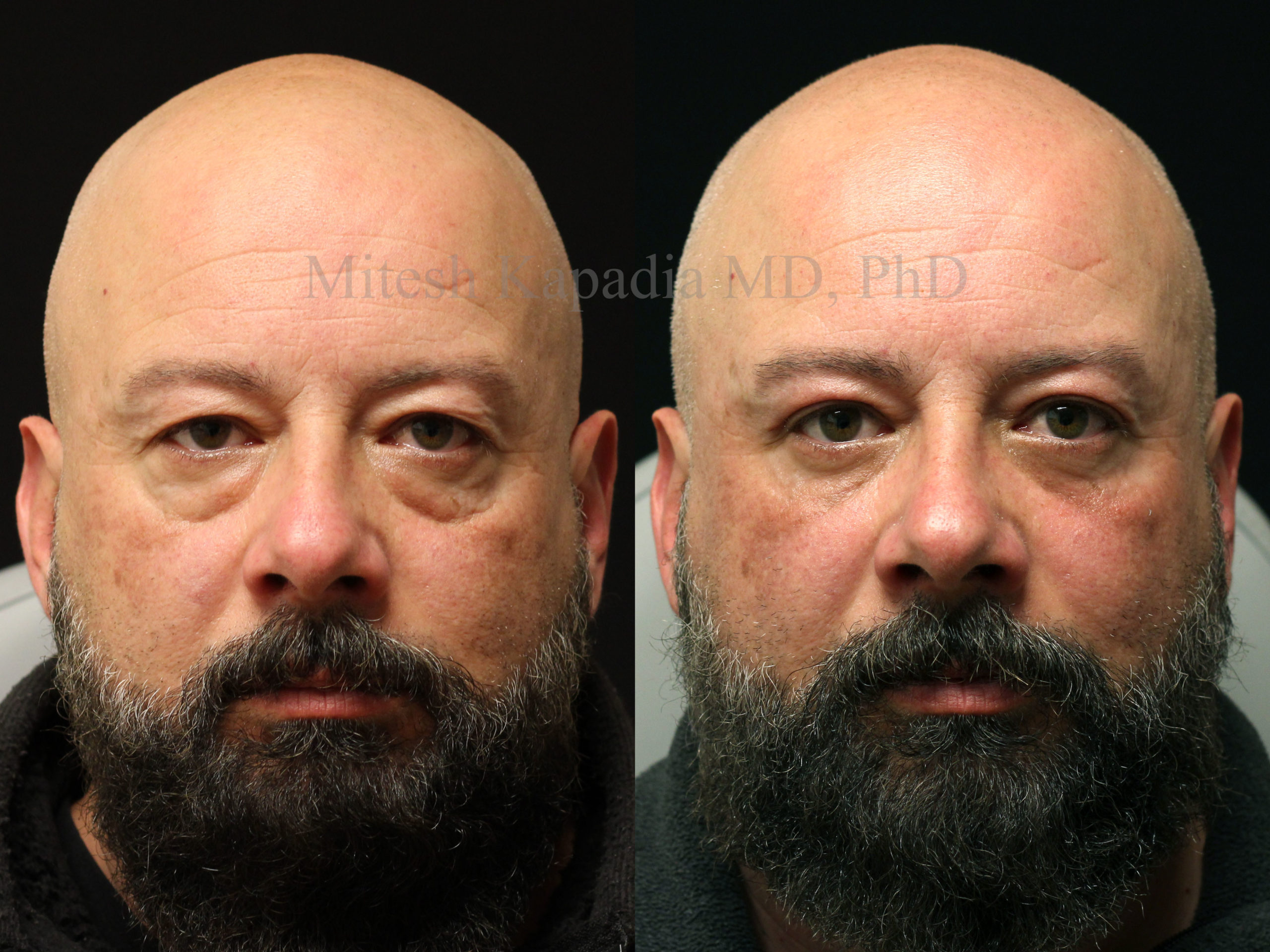
Eyelid position has a major effect on both the appearance and comfort of the eyes. When the upper eyelid sits too high, the eye can look overly open, startled, or uneven. This condition is called upper eyelid retraction.
At Boston Eyelid Surgery in Wellesley, MA, Dr. Mitesh Kapadia treats eyelid position problems, including ptosis, where the upper eyelid sits too low, and eyelid retraction, where the upper eyelid sits too high. The goal of treatment is to improve eyelid height, symmetry, comfort, and overall balance while maintaining a natural appearance.
What Is Eyelid Retraction?
Eyelid retraction means the eyelid is pulled away from its normal resting position. In upper eyelid retraction, the upper eyelid sits higher than it should. This may expose more of the white part of the eye above the iris and can make the eyes look unusually open or asymmetric.
Upper eyelid retraction is different from ptosis. Ptosis occurs when the upper eyelid droops too low and may block vision. Eyelid retraction is the opposite problem: the eyelid is elevated too high.
Lower eyelid retraction can also occur, usually when the lower eyelid sits too low or pulls away from the eye. This article focuses mostly on upper eyelid retraction, because that is the type most closely related to ptosis repair and eyelid height correction.
What Causes Upper Eyelid Retraction?
There are several reasons the upper eyelid may sit too high. Common causes include:
- Prior eyelid surgery: Eyelid retraction can occur after previous eyelid or ptosis surgery if the eyelid heals in a higher position than intended.
- Thyroid eye disease: Thyroid eye disease can affect the muscles and tissues around the eyes, sometimes causing the eyes to appear prominent and the upper eyelids to retract.
- Scarring or trauma: Injury, inflammation, or scar tissue around the eyelid can change the eyelid’s position.
- Natural eyelid asymmetry: Some patients have one eyelid that has always rested higher than the other.
- Overcorrection after ptosis repair: Ptosis repair is designed to raise a drooping eyelid. In some cases, the eyelid may be raised too much and require adjustment.
An in-person evaluation is important because the right treatment depends on the cause of the retraction, the amount of eyelid elevation, the health of the eye surface, and whether other conditions are present.
Symptoms of Eyelid Retraction
Some patients are bothered mainly by the way eyelid retraction affects their appearance. Others also experience eye irritation because the eye is more exposed than usual.
Common symptoms may include:
- Eyes that look wide open, startled, or uneven
- More white showing above the colored part of the eye
- Dryness, burning, or scratchiness
- Excess tearing, especially when the eye surface is irritated
- Light sensitivity
- Difficulty fully closing the eye in more severe cases
- A change in appearance after prior eyelid surgery
Even mild eyelid retraction can be noticeable because small differences in eyelid height can significantly affect facial expression.
Why Eyelid Position Matters
The eyelids do more than shape the appearance of the eyes. They also protect the surface of the eye and help keep it lubricated. When the upper eyelid sits too high, more of the eye may be exposed to air. This can contribute to dryness, irritation, and discomfort.
From a cosmetic standpoint, eyelid retraction can make one eye look more open than the other. Patients may describe looking surprised, intense, or unlike themselves. In many cases, the goal of surgery is not to create a dramatic change, but to bring the eyelid to a more natural position so the eyes look balanced and relaxed.
How Eyelid Retraction Is Evaluated
During a consultation, Dr. Kapadia evaluates the eyelid position, eyelid movement, eye closure, facial symmetry, and the health of the eye surface. He will also ask about previous eyelid surgery, thyroid disease, trauma, dryness, and changes in appearance over time.
Important parts of the evaluation may include:
- Measuring the height of both upper eyelids
- Comparing eyelid symmetry between the two sides
- Looking for signs of thyroid eye disease or scarring
- Evaluating how well the eyelids close
- Determining whether ptosis, dermatochalasis, or brow position is also contributing to the overall appearance
This detailed evaluation helps determine whether eyelid retraction repair is appropriate and what type of approach is most likely to help.
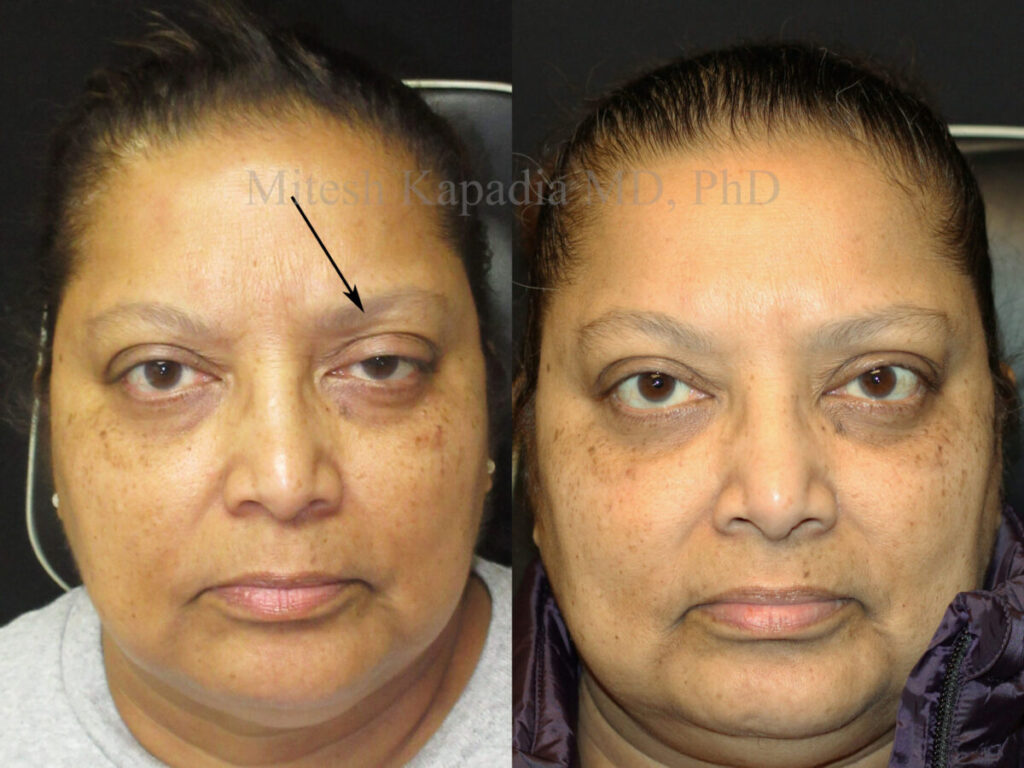
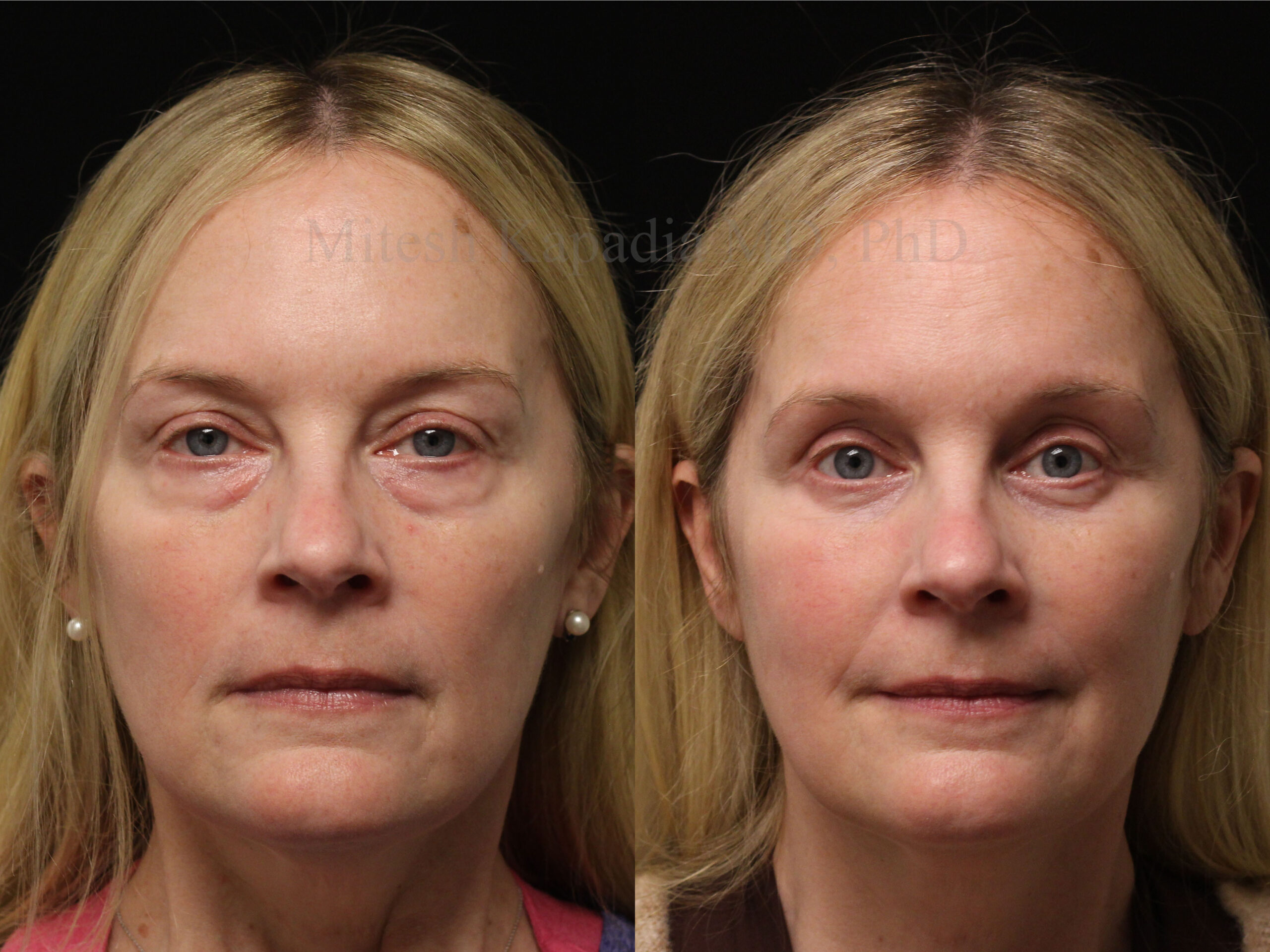
Early 60s Woman – 3 Months Post-Surgery
Eyelid Retraction Repair Surgery
Upper eyelid retraction repair is designed to lower an eyelid that sits too high. The exact surgical plan depends on the cause and severity of the retraction.
In many cases, surgery involves adjusting the eyelid-lifting muscle so the eyelid can rest in a lower, more natural position. If scar tissue from prior surgery is contributing to the problem, that scar tissue may need to be released. The goal is to improve eyelid position and symmetry while preserving normal eyelid function.
Eyelid retraction repair is highly individualized. Perfect symmetry is not always possible, but a significant improvement in eyelid position and balance is often achievable.
Is Eyelid Retraction Repair the Same as Ptosis Repair?
No. Ptosis repair and eyelid retraction repair address opposite eyelid position problems.
Ptosis repair raises the upper eyelid that sits too low. Eyelid retraction repair lowers an upper eyelid that sits too high. Both procedures require careful attention to eyelid height, contour, and symmetry, which is why they are often performed by oculoplastic surgeons who specialize in eyelid surgery.
Some patients may have a combination of eyelid issues. For example, one eyelid may be droopy while the other is retracted, or a patient may have excess upper eyelid skin in addition to an eyelid height problem. A consultation helps clarify which procedure, or combination of procedures, is appropriate.
What About Lower Eyelid Retraction?
Lower eyelid retraction is a different problem. It occurs when the lower eyelid sits too low, sometimes showing more white beneath the iris or causing the eye to feel exposed. This can happen after lower blepharoplasty, trauma, facial nerve weakness, thyroid eye disease, or scarring.
Lower eyelid retraction repair often requires different surgical techniques than upper eyelid retraction repair. The lower eyelid may need support, tightening, scar release, or grafting, depending on the cause. Because the upper and lower eyelids are repaired differently, it is helpful to separate these conditions when discussing treatment options.
Recovery After Eyelid Retraction Surgery
Recovery varies depending on the exact procedure performed and whether other eyelid surgeries are done at the same time. Most patients should expect some bruising, swelling, and temporary tightness around the eyelids.
Many patients feel comfortable returning to light activities within several days, but bruising and swelling can take longer to improve. For many eyelid procedures, patients who work from home may be able to resume work sooner, while patients who need to appear in person may prefer to allow approximately two weeks.
As with any eyelid surgery, healing takes time. Eyelid height and symmetry can continue to settle as swelling improves. Dr. Kapadia will review recovery expectations during the consultation based on your specific surgical plan.
Why Choose Boston Eyelid Surgery?
Eyelid retraction is a subtle but complex eyelid position problem. Even a small adjustment can make a meaningful difference in how the eyes look and feel. Because of this, it is important to choose a surgeon with extensive experience in eyelid anatomy and eyelid position surgery.
Dr. Mitesh Kapadia focuses on cosmetic and reconstructive eyelid surgery and has extensive experience treating patients with ptosis, eyelid retraction, eyelid asymmetry, and revision eyelid concerns. At Boston Eyelid Surgery, the goal is to create a personalized treatment plan that improves function and appearance while keeping the result natural.
Schedule a Consultation in Wellesley, MA
If one or both of your upper eyelids sit too high, or if your eyes look uneven after previous eyelid surgery, eyelid retraction repair may help restore a more balanced appearance.
Contact Boston Eyelid Surgery in Wellesley, MA, to schedule a consultation with Dr. Kapadia and learn whether eyelid retraction repair is right for you.