Author
Boston Eyelid Surgery
Share
“Bleph” is short for blepharoplasty, which is the medical word for eyelid surgery. An upper bleph removes the loose skin that hangs over your upper eyelid. A lower bleph deals with the bags and puffiness under your eye. When someone says “upper and lower bleph,” they mean having both areas done at the same time. We get asked this question almost every week at our Wellesley office, so here is the plain answer.
Why People Say “Bleph”
Blepharoplasty is a hard word to say and a harder word to spell. So most people shorten it to “bleph.” Doctors do it too. You may also hear it called an eye lift, an eyelid lift, or eyelid surgery. All of those words point to the same family of procedures.
The full name comes from two old Greek words. “Blepharon” means eyelid. “Plasty” means to shape or repair. So blepharoplasty just means reshaping the eyelid. That is all it is. There is nothing mysterious hiding behind the long name.
What makes it confusing is that one word covers two very different operations. The upper lid and the lower lid have different problems. They need different work. Knowing which one you are talking about is the first step.
What an Upper Bleph Does
An upper bleph works on the skin above your eye.
As you age, the skin on your upper lid stretches out. It loses its spring. Over time it can fold down toward your lash line. Some people call this hooding. Others just say their eyes look tired no matter how much they sleep. A few notice that eye makeup no longer sits where they put it.
During an upper blepharoplasty, we remove a strip of that extra skin. Sometimes we take a small amount of fat with it. The cut goes in the natural crease of your eyelid, so the line tucks out of sight once your eye is open.
An upper bleph can do two jobs at once. It can make your eyes look more rested. And if the skin was heavy enough to block the top of your vision, it can help you see better. That second part matters, because it is the reason some upper lid surgery gets covered by insurance. We explain that in more detail in our article on the difference between medical and cosmetic upper eyelid surgery.
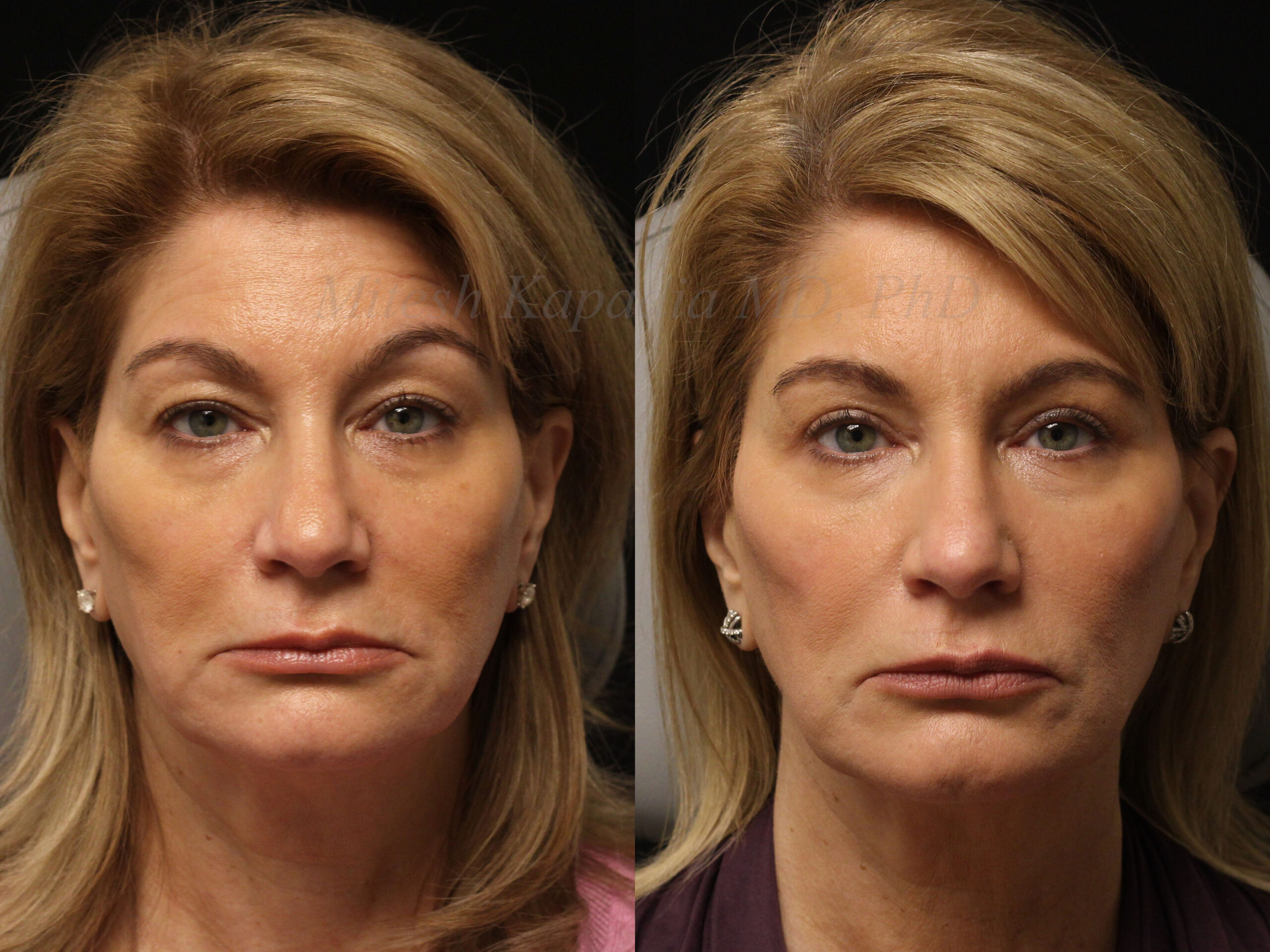
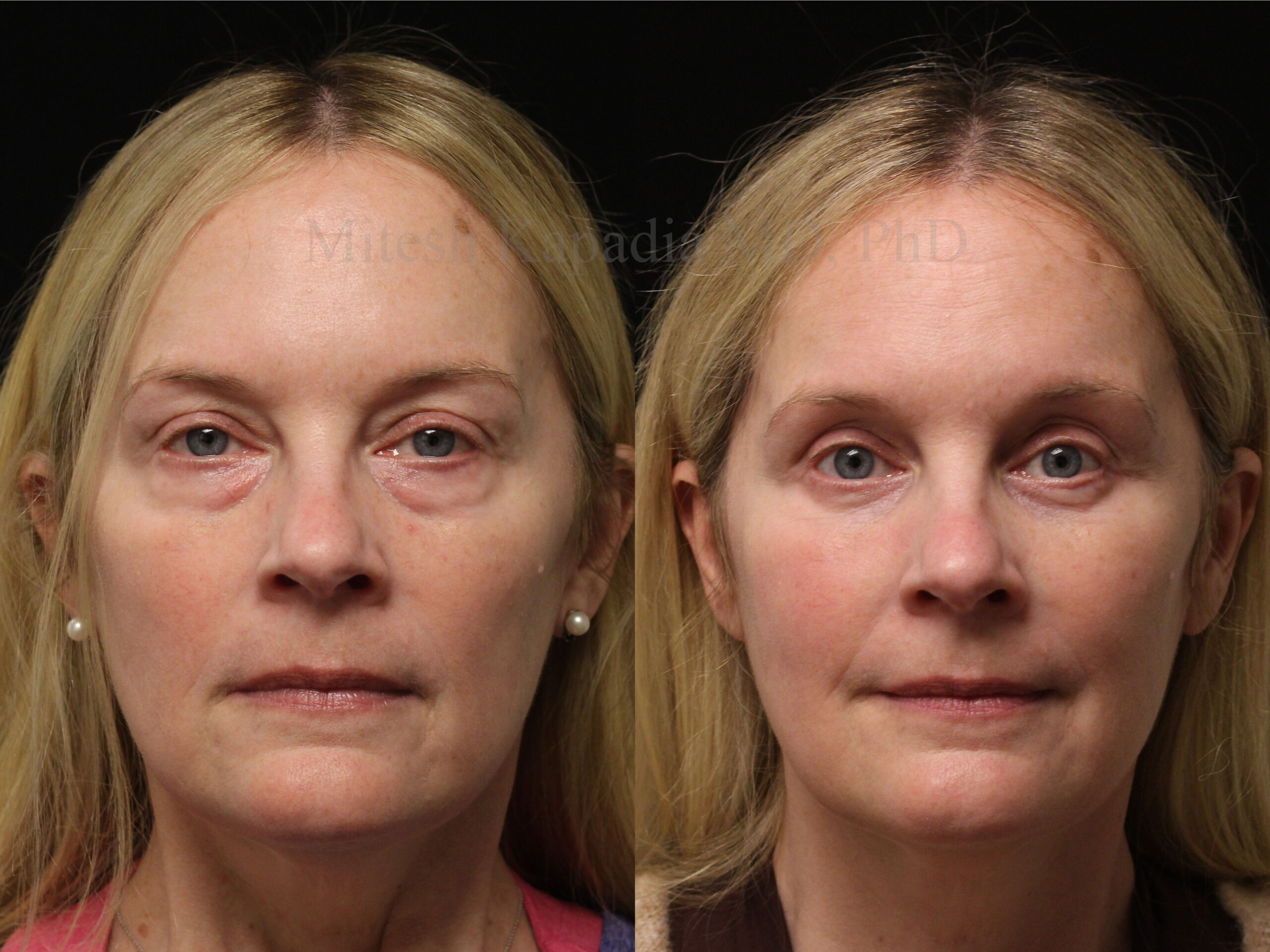
This photo shows a patient in her mid 50s. She is 6 months post op upper eyelid surgery.
What a Lower Bleph Does
A lower bleph works on the area under your eye.
Here is something that surprises most people: the puffiness under your eye is usually not swelling. It is fat. You have small fat pads that sit behind your lower lid and cushion your eyeball. The tissue holding those pads in place gets weaker with age. The fat pushes forward. That is what makes a bag.
A lower blepharoplasty deals with that fat. We do not always remove it, and removing all of it is often the wrong move. Taking too much fat out can leave the under-eye looking hollow and older, not younger. Much of the time the better answer is to move the fat instead. We slide it down into the dip just below the bag and smooth the whole area into one gentle curve.
Sometimes a small amount of loose skin comes off as well. Sometimes it does not need to. It depends on your skin and how much give it has.
There are two things a lower bleph does not fix on its own. It does not smooth fine crinkly skin. And it does not lighten dark color under the eye. Those problems come from different causes and need different treatments, which we cover in our article on dark circles under the eyes.
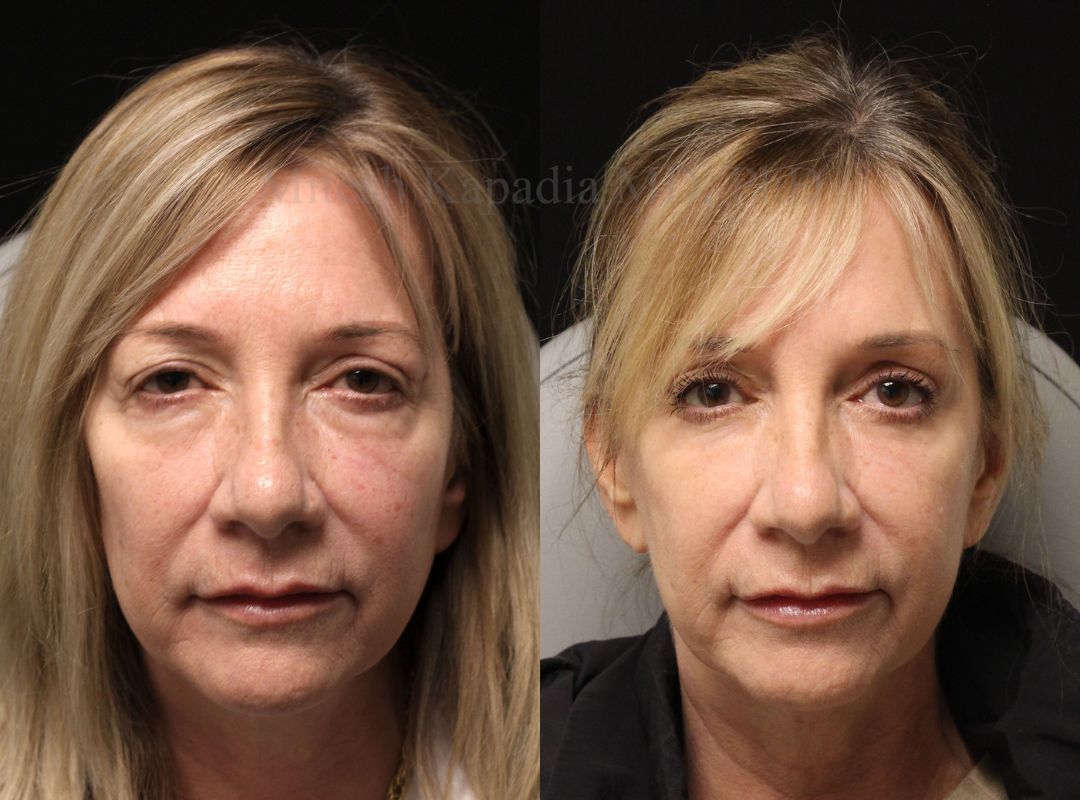
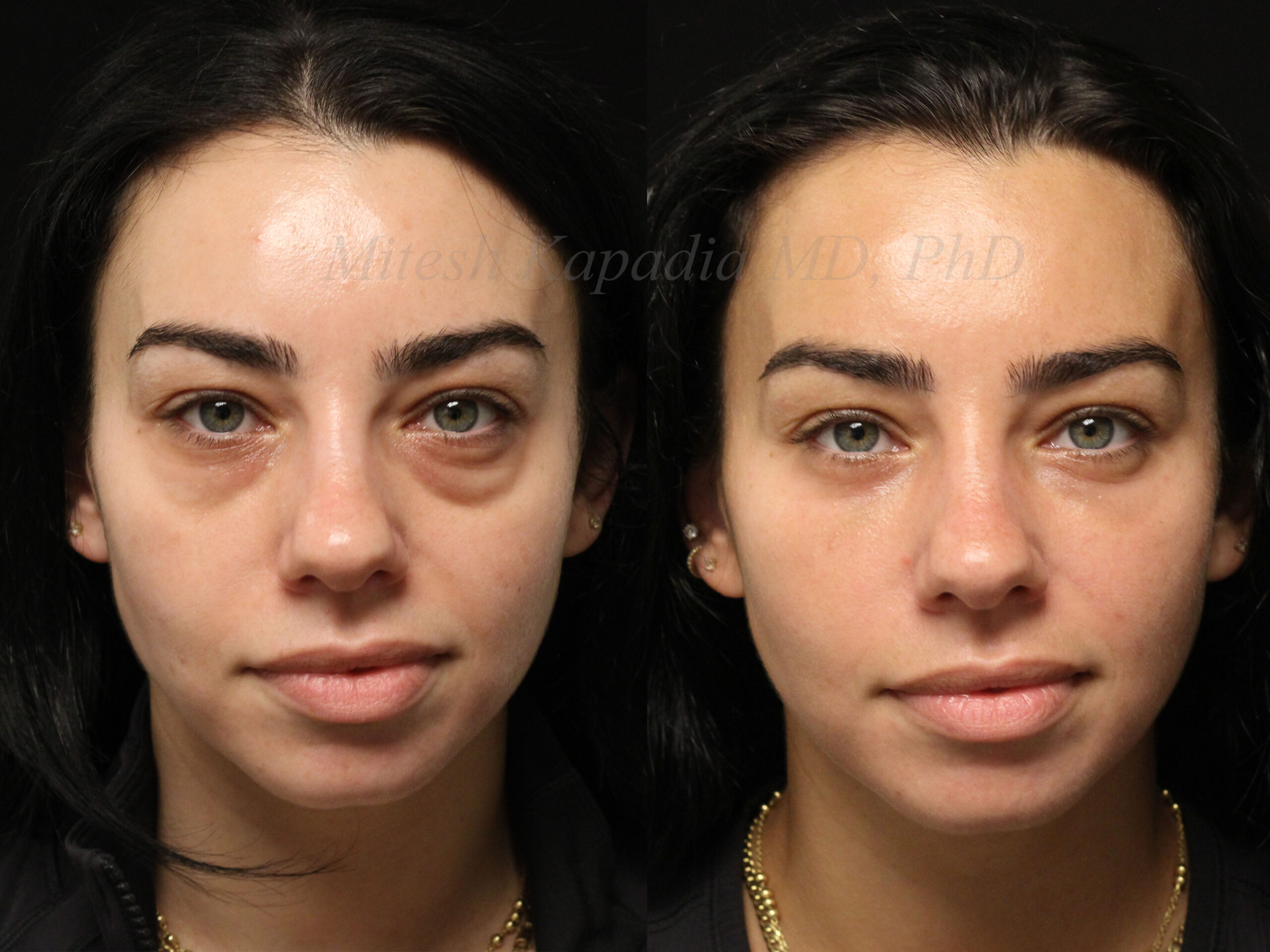
This picture shows a patient in her mid 30s. She is 6 months post op lower eyelid surgery. 1.00 vials of filler were used to blend the eyelid-cheek junction.
Why Some People Have Both at Once
Upper and lower lids age at different speeds. Plenty of people only ever need one.
But when both lids look tired, doing them together usually makes sense. You go through surgery once. You recover once. You take time off work once. And the result tends to look more balanced, because we plan the top and the bottom as one face rather than as two separate jobs months apart.
That is all an upper and lower blepharoplasty means. It is not a bigger or riskier operation by nature. It is both areas handled in the same visit.
Doing both does add to the swelling in the first week, and it does add to the cost. We will be straight with you about both at your consultation.
How We Decide Which One You Need
Most people arrive certain they know the answer. Often they are right. Sometimes they are not, and that is worth catching before surgery rather than after.
Here is what we look at:
- Where the heaviness actually sits. Sometimes the real problem is a low brow, not the eyelid skin.
- Whether the upper lid is heavy with skin, or whether the lid itself is sitting too low. Those two look alike in the mirror but need completely different surgery. Our article on surgery for droopy eyelids walks through the difference.
- Whether the fullness under your eye is fat, fluid, or a festoon. Each one responds differently, and one of them does not respond to eyelid surgery at all.
- How your eyes feel, not just how they look. If your eyes run dry, that changes the plan.
We take photos and measurements at your visit. Then we tell you what we see, including the times when the honest answer is that you do not need surgery yet.
What Recovery Looks Like
Recovery for eyelid surgery is easier than most people expect, but it is not nothing.
Expect swelling and bruising in the first week. Expect to use cold compresses and to sleep with your head raised. Most people feel fine within a day or two. Looking fine takes longer than feeling fine, and that gap is what catches people off guard.
Upper lids tend to settle faster than lower lids. Lower lid swelling can hang around for weeks, and small changes keep happening for months after that. We give every patient written postoperative instructions so you know what is normal and what is not.
Your exact timeline depends on which surgery you have and how you heal. We will give you real numbers for your case at your consultation rather than a general estimate.
What It Costs
Cost is one of the first things people want to know and one of the last things most practices will put in writing. We publish ours.
The price is different for an upper bleph, a lower bleph, and both together. Doing both at the same time costs less than doing them one at a time, because you only pay for the facility and anesthesia once. You can see our current pricing on our cost of services page.
If your upper lid skin is blocking your vision, part of the cost may be covered by insurance. That requires testing and paperwork before surgery, not after, so bring it up at your first visit.
The Bottom Line
“Bleph” just means eyelid surgery. An upper bleph handles the skin above your eye. A lower bleph handles the bags below it. Having both at once is common when both areas need help, and it means one recovery instead of two.
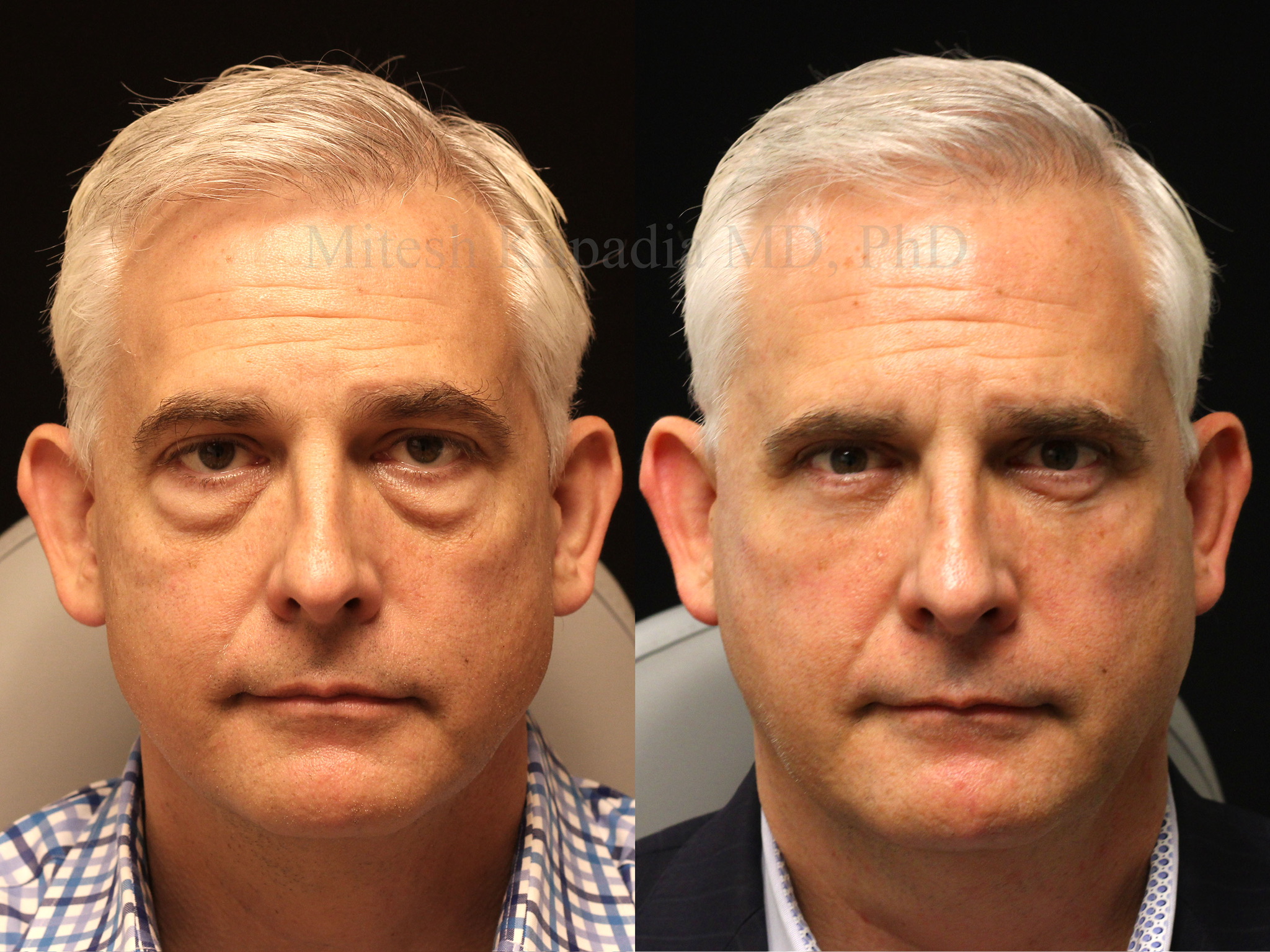
The right answer depends on your face, not on a general rule. A good place to start is looking at before and after photos, because you can see for yourself what each surgery actually changes.
If you want to know which one fits you, schedule a consultation with us. We will look at your eyelids, explain what we see in plain language, and give you a straight answer, even if that answer is to wait. You can also reach our Wellesley office directly at (978) 393-5437.